Lesson OverviewUse cleaning chemicals safely, separate cleaning from sanitizing, and manage waste. Learn how these routines reduce contamination and pests.
Read the label first
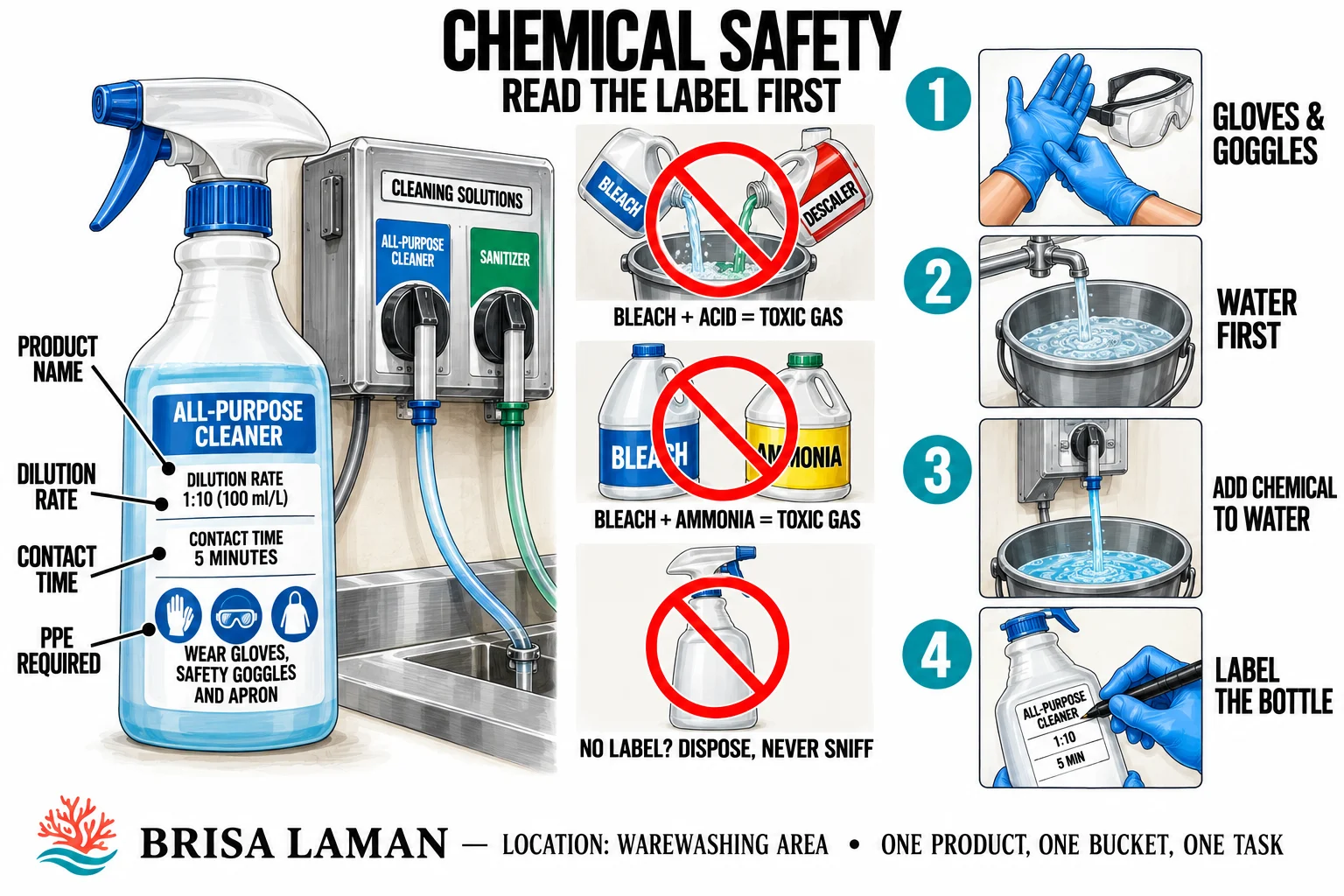
Every chemical in the building has a label and a safety data sheet held in the folder by the warewashing area. Before first use, read the label for what the product is for, how to dilute it, how long it must stay wet on the surface, what protective equipment it needs, and what to do for skin or eye contact.
Never decant a chemical into an unlabelled bottle, and never into a food container, drinks bottle, or squeeze bottle. If a container's label is missing or unreadable, the contents are unknown and the whole container is disposed of, not sniffed to identify.
Never mix chemicals. Chlorine bleach mixed with an acidic descaler releases chlorine gas; mixed with ammonia it releases chloramine. Both can put a person in hospital from a single breath in a closed space. One product, one bucket, one task.
Store chemicals in a dedicated area, never above or beside food, never in the walk-in, and never on a shelf above your head.
Protect yourself
Wear chemical-resistant gloves and eye protection when decanting, diluting, degreasing, or using the oven cleaner. Wear an apron. Work with the extraction running or the door open where possible.
Dilute exactly as the label states, using the dosing pump or measure provided. Stronger is not better: over-concentrated sanitizer leaves residue on food-contact surfaces, and under-concentrated sanitizer simply does not work. Add chemical to water, never water to chemical.
1
Gloves and goggles Put on gloves and safety goggles before you handle or mix any chemical.
2
Water first Fill the bucket or bottle with water before adding the chemical.
3
Add chemical to water Add the chemical to the water at the dilution on the label, never water onto the chemical.
4
Label the bottle Label every bottle you fill with the product name, dilution, and contact time.
Cleaning and sanitizing are two steps
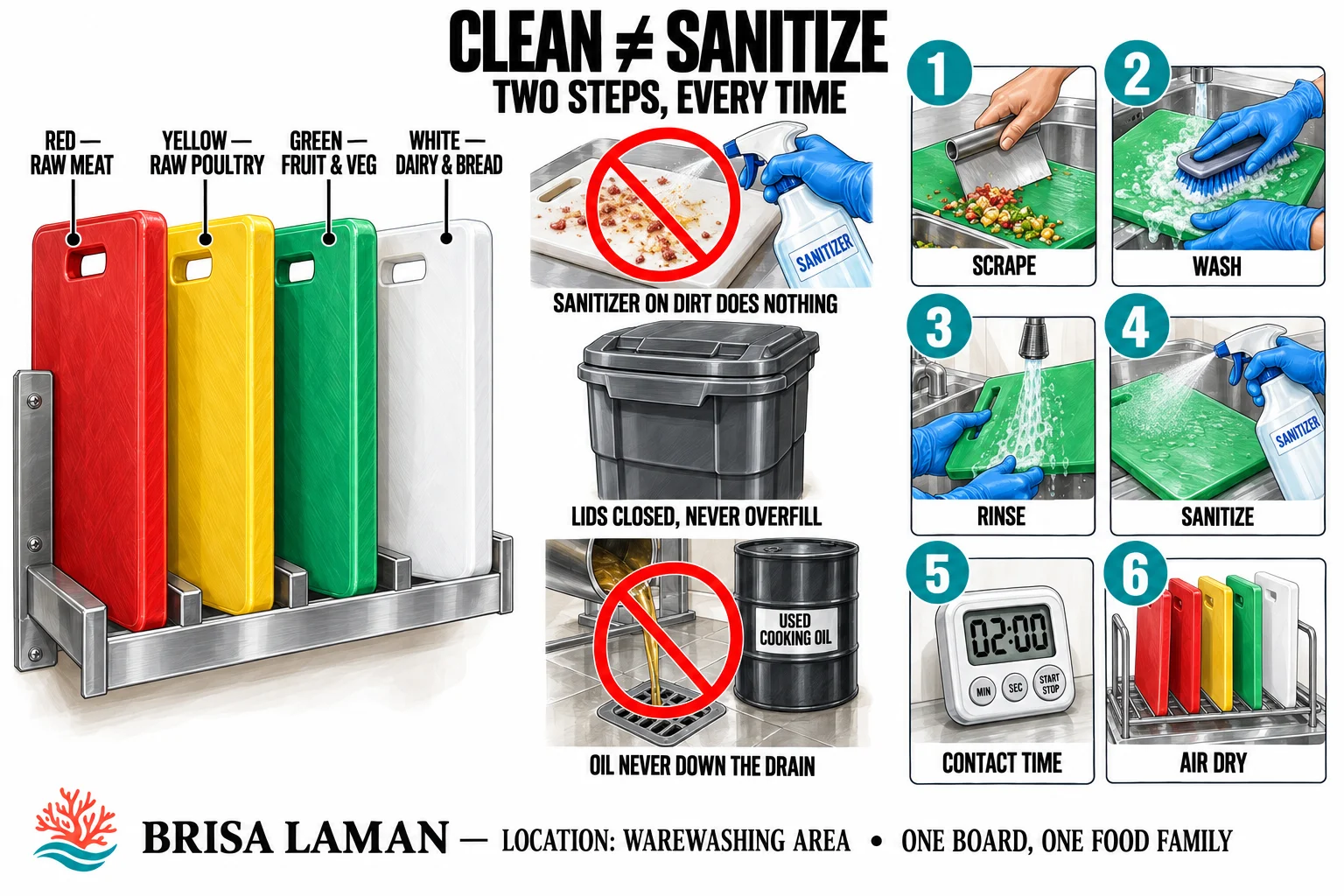
Cleaning removes visible soil, grease, and food. Sanitizing reduces bacteria to a safe level. Sanitizer applied to a dirty surface does nothing, because organic matter deactivates it.
For every food-contact surface, follow the sequence: scrape, wash with detergent and hot water, rinse, apply sanitizer, leave it for the full contact time stated on the label, then air dry. Air drying matters; wiping with a cloth reintroduces bacteria.
Sanitize prep counters, the wall rack boards, knives, probe thermometers, and equipment between food families and at every changeover. The colour-coded rule still governs: red for raw meat, yellow for raw poultry, green for fruits and vegetables, white for dairy and bread. One board, one food family, and every board through a full clean-and-sanitize cycle before it returns to the rack.
Confirm the warewashing machine reaches its wash and rinse temperatures, and change wash water when it turns greasy.
1
Scrape Scrape food waste into the bin before you start washing.
2
Wash Wash with hot soapy water and a brush to remove grease and dirt.
3
Rinse Rinse with clean water to remove all detergent.
4
Sanitize Apply the approved sanitizer at the correct strength; sanitizer on dirt does nothing.
5
Contact time Allow sanitizer to stay on the clean surface for its required contact time.
6
Air dry Let equipment air dry completely; do not wipe away the sanitizer.
Waste and pests
Separate waste as it is generated: food waste, recyclables, glass, and used cooking oil into the sealed oil container. Never pour oil or grease down a drain. Keep bin lids closed, line bins properly, and never overfill. Empty before bins reach the top, and wash and sanitize both the bin and your hands afterwards, using the handwashing sink by the staff entrance.
Take waste out by the route Marisol shows you, keeping exit paths clear as you go. Outside bins stay closed and away from the delivery door.
A warm coastal kitchen attracts flies, cockroaches, ants, and rodents. Keep external doors closed, screens intact, and drains clean. Report any sighting, droppings, or gnaw marks to Chef Dominic the same shift. Sign the cleaning schedule only for work you actually completed.
Finish Course Early?
You have not completed all required lessons and assessments.